If you are searching “why is my computer slow,” you are not alone. A computer that takes too long to start, freezes during simple tasks, or struggles with everyday programs can quickly become frustrating. Slow performance can affect your productivity, whether you use your device for work, school, business, or personal activities.
The reason behind a slow computer is not always obvious. Sometimes the problem is caused by too many background programs, limited storage space, outdated hardware, or software issues. In other cases, a slow computer may be showing signs that it needs maintenance, upgrades, or professional attention.
At Computers Repair Plus, we help customers in Bradenton, Lakewood Ranch, Sarasota, and surrounding areas understand common computer problems and find practical solutions. Whether your laptop is running slow, your PC needs optimization, or you are deciding between repair and replacement, identifying the actual cause is the first step toward making the right decision.
Need help understanding what is slowing down your device? Contact Computers Repair Plus or call (941) 567-6431 to discuss your computer issue and explore the right solution.
12 Common Reasons Your Computer Is Running Slow
A slow computer is usually caused by one or more issues working together. Below are some of the most common reasons technicians look for when diagnosing performance problems.
1. Too Many Programs Running in the Background
Many applications continue running even when you are not actively using them. These background processes consume your computer’s memory and processing power, making everyday tasks feel slower.
Programs that automatically start when you turn on your computer can also increase startup time. Examples include cloud storage applications, software updates, messaging apps, and unnecessary utilities.
What you can do:
- Check which programs launch during startup
- Close applications you are not using
- Remove unnecessary software
If your computer still feels slow after reducing background activity, the issue may require deeper troubleshooting.
2. Limited Storage Space
When your hard drive or SSD becomes nearly full, your computer may struggle to perform efficiently. The operating system needs available storage space to manage temporary files, updates, and normal operations.
A full storage drive can lead to:
- Longer startup times
- Slower file access
- Programs freezing or responding slowly
What you can do:
- Remove unused files and applications
- Move large files to external storage
- Consider a storage upgrade if your drive is outdated or too small
3. An Older Hard Drive or Slow Storage Device
Traditional hard drives (HDDs) are slower than modern solid-state drives (SSDs). If your computer still uses an older HDD, upgrading to an SSD can significantly improve startup speed and overall responsiveness.
However, an SSD upgrade is not always the only solution. A technician can help determine whether upgrading your current system makes sense or whether replacement is a better option.
4. Not Enough RAM
RAM allows your computer to handle multiple tasks at the same time. When your system does not have enough memory, it may slow down when opening multiple programs, browsing with many tabs, or using demanding applications.
Signs of insufficient RAM include:
- Frequent freezing
- Slow multitasking
- Programs closing unexpectedly
A memory upgrade may improve performance depending on your computer model and hardware limitations.
5. Malware or Unwanted Programs
Viruses, spyware, and unwanted software can affect computer performance. Some malicious programs use system resources in the background, causing slowdowns while creating security risks.
Professional Virus & Malware Protection and Removal can help identify harmful software, remove threats, and improve system security.
Avoid downloading random “speed booster” programs, as some may create additional problems instead of fixing them.
6. Too Many Browser Extensions
Web browsers can become slower when they have too many extensions installed. Some extensions run continuously and use memory even when you are not actively using them.
Try:
- Removing extensions you no longer need
- Clearing browser cache
- Updating your browser
If the entire computer is slow, not just your browser, the problem may be related to system performance.
7. Outdated Software or Operating System Issues
Keeping your operating system and applications updated is important for security and performance. Outdated software can sometimes create compatibility problems or performance issues.
However, updates alone may not fix slow performance if the hardware is outdated or damaged.
8. Overheating Problems
Computers generate heat during operation. When cooling systems cannot remove heat properly, the processor may reduce performance to prevent damage.
Common causes include:
- Dust buildup inside the computer
- Blocked ventilation
- Fan problems
- Poor airflow
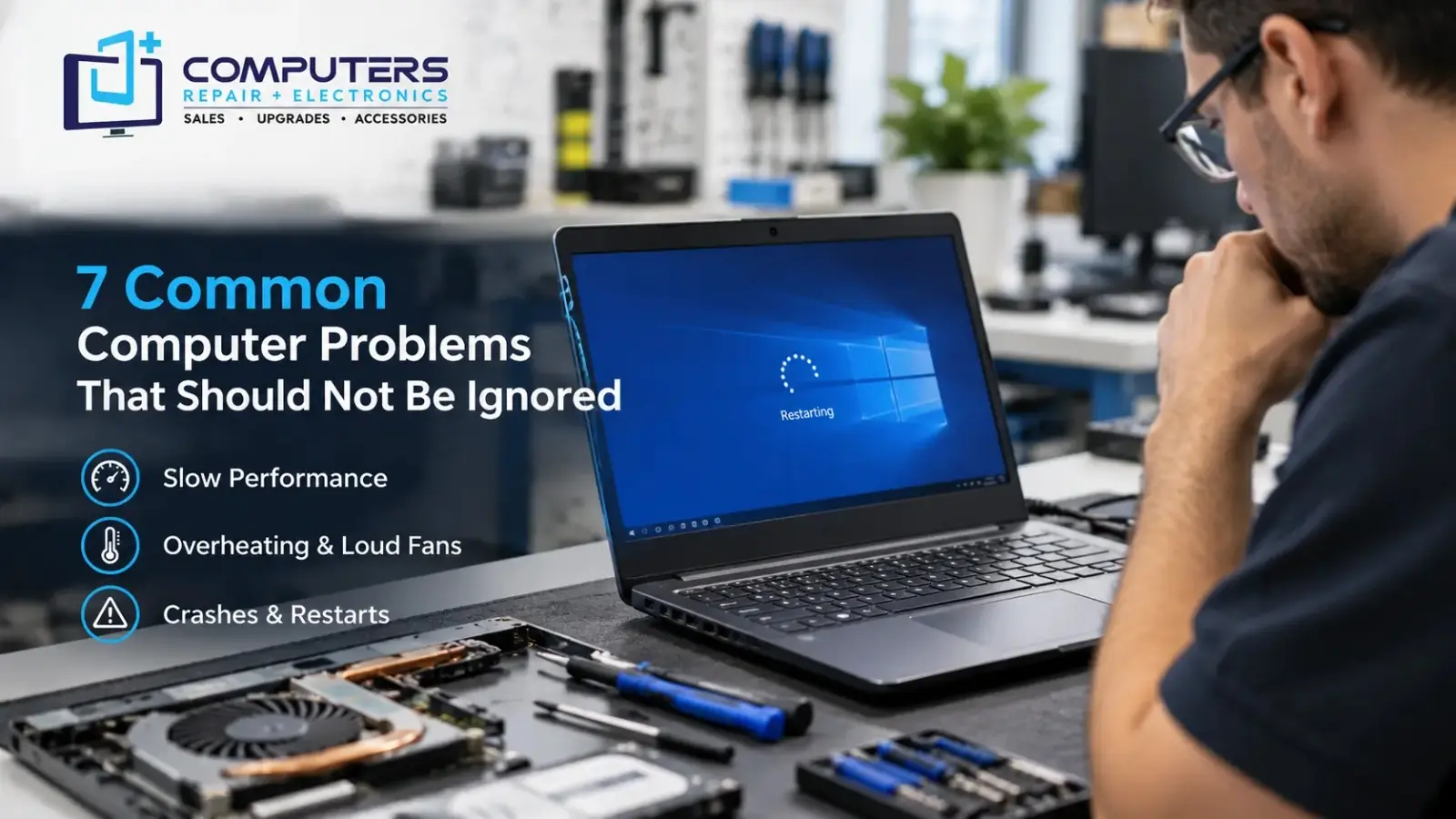
If your computer becomes unusually hot, shuts down unexpectedly, or slows down during use, it may need inspection.
9. Too Many Temporary Files and System Clutter
Over time, computers collect temporary files, old downloads, cached data, and unused applications. While some temporary files are normal, excessive clutter can contribute to slower performance.
Regular maintenance can help keep your system organized and improve usability.
10. Hardware Problems
Sometimes a slow computer is not caused by software. Failing components such as storage drives, memory issues, or other hardware problems can reduce performance.
Warning signs may include:
- Strange noises from the computer
- Frequent crashes
- Files becoming difficult to open
- Sudden performance drops
In these situations, professional diagnosis can help prevent further problems and protect important data.
11. Your Computer May Need Optimization
Many users assume they need a new computer when their current device may simply need maintenance or upgrades.
A professional Computer Repair & Upgrades service can help evaluate your system, identify performance issues, and recommend practical improvements based on your needs.
A proper evaluation can help answer questions like:
- Is my computer worth upgrading?
- Should I replace my hard drive?
- Do I need more RAM?
- Is my computer too old for my daily tasks?
12. Your Computer May No Longer Meet Your Needs
Sometimes repair and upgrades are not the most practical option. If your computer is very old or cannot support the software you need, replacing it may be more cost-effective.
Computers Repair Plus also provides New Computer Sales to help customers choose systems based on their actual requirements instead of purchasing unnecessary features.
How to Decide Between Repair, Upgrade, or Replacement
When a computer becomes slow, the best choice depends on several factors:
Repair may be the right option when:
- The issue is caused by software problems
- A component can be replaced easily
- The computer still meets your needs
Upgrades may help when:
- You need faster storage
- You need additional memory
- The computer is otherwise reliable
Replacement may make sense when:
- The hardware is outdated
- Repair costs approach replacement costs
- The device cannot support your required programs
Making the right decision requires understanding the actual cause of the slowdown, not just replacing the computer immediately.
Why Professional Diagnosis Can Help
Trying random fixes from the internet can sometimes make computer problems worse. For example, deleting important files, installing unreliable software, or changing system settings without understanding their purpose can create additional issues.
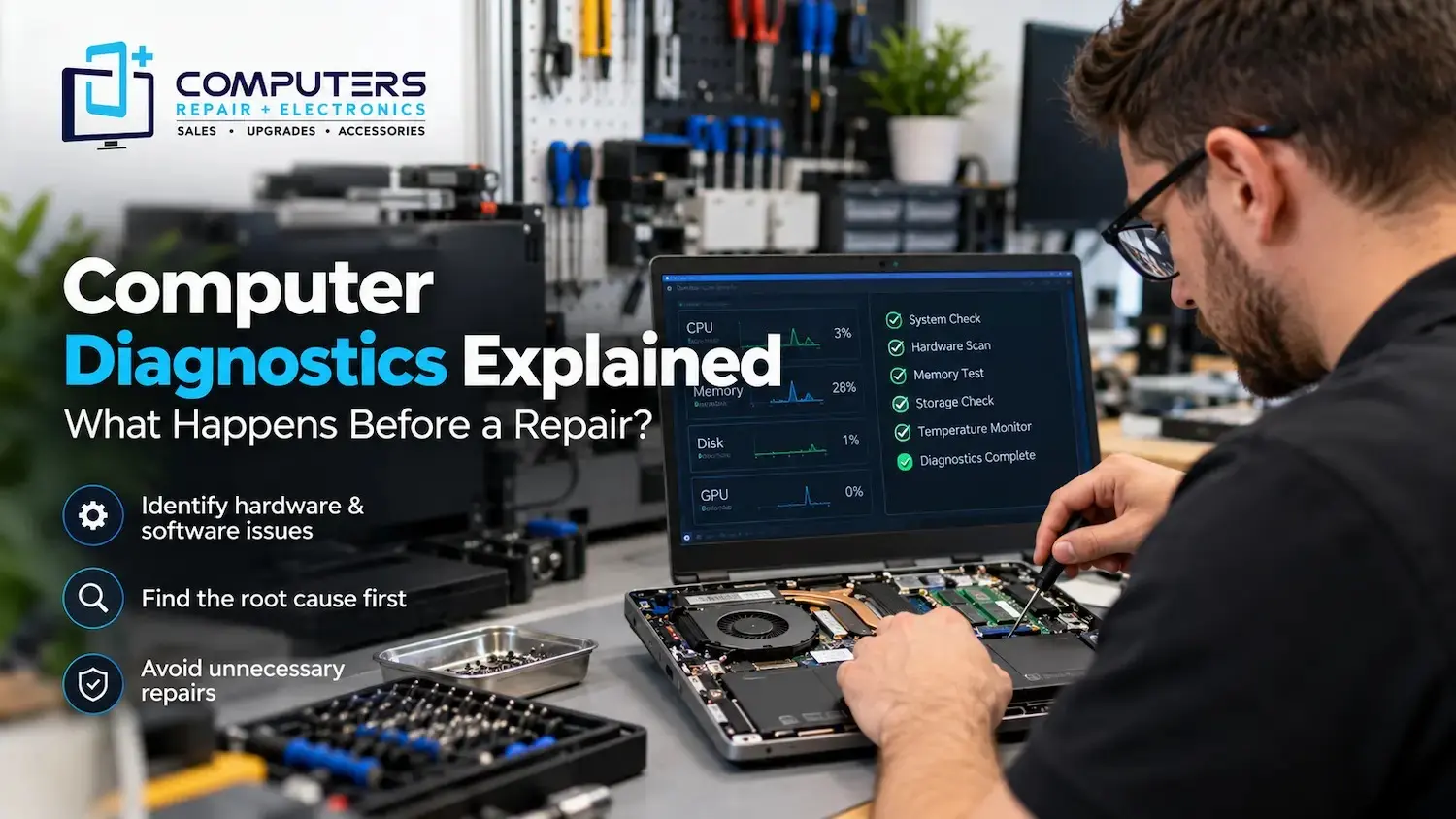
A professional technician can inspect the system, identify the cause, and recommend solutions based on your specific computer and usage needs.
For customers in Bradenton and nearby areas, Computers Repair Plus helps diagnose computer performance issues and provides guidance on repair, upgrades, and replacement options.
Frequently Asked Questions
Why is my computer slow even though I have enough storage space?
A computer can still be slow even with available storage. Other causes may include insufficient RAM, background programs, malware, outdated hardware, overheating, or software issues.
How can I speed up my slow laptop?
Start by closing unused programs, removing unnecessary applications, checking available storage, updating software, and scanning for malware. If performance problems continue, professional diagnosis may help identify the underlying cause.
Is it better to repair a slow computer or buy a new one?
It depends on the computer’s age, condition, and the cause of the slowdown. Some computers only need upgrades or maintenance, while older systems may be better replaced.
Can a virus make my computer run slowly?
Yes. Malware and unwanted programs can use system resources and reduce performance. A security check can help identify whether harmful software is affecting your computer.
Does adding RAM make a computer faster?
Adding RAM can improve performance when your computer does not have enough memory for your normal tasks. However, it will not solve every slow computer problem.
How often should I optimize my computer?
Regular maintenance helps keep computers running efficiently. The right frequency depends on how you use your device, installed programs, and overall system condition.